RAY CHARLES / “Drown In My Own Tears”
I suppose I've always done my share of crying, especially when there's no other way to contain my feelings. I know that men ain't supposed to cry, but I think that's wrong. Crying's always been a way for me to get things out which are buried deep, deep down. When I sing, I often cry. Crying is feeling and feeling is being human. Oh yes, I cry. —Ray CharlesHouse parties. Blue lights and little bitty tuna fish sandwiches on a folding-card table. Dixie cups of red Kool-Aid (with wine in it). No chairs in the room where people was dancing. Three girls on the wall, talking softly with each other, looking at a clump of us boys, talking loudly to each other. Only that fool Arnold is dancing, trying (badly) to do the James Brown. Somebody says, damn, it’s hot. And just then, on the box, Ray Charles drops and there is a mad dash for Inez. I wasn’t in the competition, I had already turned toward Betty, and for the next six minutes I was in slow grind heaven, transported by the down-dirty spaceship of Ray Charles’ bluesy croon. Meanwhile around the corner, that same song was blaring from the jukebox in the bar where us young teenagers were not allowed to go, nevertheless, even if you was just standing in the middle of the dusty, oyster-shell covered street you could still clearly hear the Raelettes wail, not to mention Ray making that electric piano moan. What I mean is, there was a time when popular black music appealed to both adults and youth. The same appeal. Us teens trying to learn to do like the big folk do, and the big folk steady trying to show us teens how to do the do. What happened? There’re a lot of theories, but right now I am not interested in what changed, I am more interested in savoring the music of that moment, not in nostalgia, even though that’s the way I opened this appreciation (i.e. romantically reflecting on the way it used to be). Nor is this a veiled diatribe against today’s youth or today’s youth culture. What I say is: thank whatever gods there be for the right Reverend Ray Charles. Ray didn’t write "Drown In My Own Tears," but he damn nears owns it. This live recording is taken from a 1959 Atlanta, Georgia concert amateurishly recorded on an old two-track tape recorder. The spirit of the music easily overrides the miserly audio deficiencies. Louis Jordan had been John the Baptist to the godhead of Ray Charles, and this was the moment when jazz and rhythm & blues were Siamese twins conjoined at the hips. There had not yet been that decisive split, and the blues was the glue that kept the diverse elements pressed together, much like me and what’s her name were that Friday night on Tupelo street.
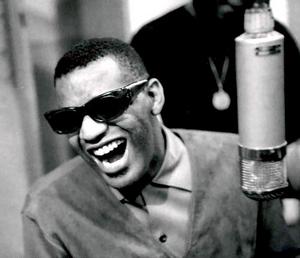 Ray Charles had a way of making everybody else disappear. It didn’t matter that the room was full of shadows doing the same thing you were doing, or that the bar was packed with fools being parted from their money, or that there were probably thousands in attendance when it was recorded, or maybe just hundreds. Whatever, it didn’t matter. The music was broad enough to carry us all, and personally significant enough that each of us thought it was just for us — i.e., me and this young lady in my arms.
I don’t know what Ray Charles was thinking about when he recorded this. Since it was not a professional session, Ray probably was not even thinking about recording. Maybe he was thinking about a recent (or a distant) used-to-be. Maybe he was thinking about losing his eyesight. Who knows.
This kind of blues is more than music, it is a map of the human condition, a condition which, for the majority of humankind, includes serious helpings of misery and suffering, even if it was only the adolescent angst of not having anyone to dance with, so rather than stand there like an erection without a cause, you sauntered out the room, trying your best to look as cool as hell, even though you knew nobody who was dancing in that room was paying even the slightest attention to you, still, it was de rigueur to look cool rather than desperate, so you took a hip-limped hike, went outside, looked up at the stars, and with the music in the background, silently and dryly drowned in your own tears.
Ray Charles understood exactly what it meant to be alone.
Oh, by the way, there are at least ten other cuts that are classics on this recording (which also includes the Ray's Live At Newport recording); pieces like “I’ve Got A Woman,” “A Fool For You,” “What’d I Say,” “Tell The Truth,” the Latin-esque "Frenesi" (which I include just to make clear both the jazz roots and the rhythm orientation of Ray Charles — I was a cha-cha-ing fool back in the day, y'all should have seen me), and two (that's right, count 'em, two) live versions of the all-time blues stomp (with Fathead’s locomotive tenor spewing black coal dust from the jump) "(The Night Time Is) The Right Time," which is, of course, also the vehicle on which Marjorie Hendricks screams “Baaa—aaaa—bayyy!!!!!”
Back in the Fifties, the church people hated Ray Charles precisely because they knew that he had the emotion right, except that the flesh was not supposed to be the object or cause of such other-worldly song, that was God’s province. Which is, I think, what Ray Charles did better than anyone before (or since, including Aretha Franklin); Ray found a way to make the four legs of that Siamese twin (jazz mated to R&B) dance without crossing its legs. (Uncrossed legs is the only kind of dancing they allowed in church back then). This was sacred music. Sacred.
And blues. Sacred. And jazz. All at one time. Baaa—aaaa—bayyy!!!!! Don’t it make you feel alright?!
—Kalamu ya Salaam
Click here to purchase Ray Charles Live
Ray Charles had a way of making everybody else disappear. It didn’t matter that the room was full of shadows doing the same thing you were doing, or that the bar was packed with fools being parted from their money, or that there were probably thousands in attendance when it was recorded, or maybe just hundreds. Whatever, it didn’t matter. The music was broad enough to carry us all, and personally significant enough that each of us thought it was just for us — i.e., me and this young lady in my arms.
I don’t know what Ray Charles was thinking about when he recorded this. Since it was not a professional session, Ray probably was not even thinking about recording. Maybe he was thinking about a recent (or a distant) used-to-be. Maybe he was thinking about losing his eyesight. Who knows.
This kind of blues is more than music, it is a map of the human condition, a condition which, for the majority of humankind, includes serious helpings of misery and suffering, even if it was only the adolescent angst of not having anyone to dance with, so rather than stand there like an erection without a cause, you sauntered out the room, trying your best to look as cool as hell, even though you knew nobody who was dancing in that room was paying even the slightest attention to you, still, it was de rigueur to look cool rather than desperate, so you took a hip-limped hike, went outside, looked up at the stars, and with the music in the background, silently and dryly drowned in your own tears.
Ray Charles understood exactly what it meant to be alone.
Oh, by the way, there are at least ten other cuts that are classics on this recording (which also includes the Ray's Live At Newport recording); pieces like “I’ve Got A Woman,” “A Fool For You,” “What’d I Say,” “Tell The Truth,” the Latin-esque "Frenesi" (which I include just to make clear both the jazz roots and the rhythm orientation of Ray Charles — I was a cha-cha-ing fool back in the day, y'all should have seen me), and two (that's right, count 'em, two) live versions of the all-time blues stomp (with Fathead’s locomotive tenor spewing black coal dust from the jump) "(The Night Time Is) The Right Time," which is, of course, also the vehicle on which Marjorie Hendricks screams “Baaa—aaaa—bayyy!!!!!”
Back in the Fifties, the church people hated Ray Charles precisely because they knew that he had the emotion right, except that the flesh was not supposed to be the object or cause of such other-worldly song, that was God’s province. Which is, I think, what Ray Charles did better than anyone before (or since, including Aretha Franklin); Ray found a way to make the four legs of that Siamese twin (jazz mated to R&B) dance without crossing its legs. (Uncrossed legs is the only kind of dancing they allowed in church back then). This was sacred music. Sacred.
And blues. Sacred. And jazz. All at one time. Baaa—aaaa—bayyy!!!!! Don’t it make you feel alright?!
—Kalamu ya Salaam
Click here to purchase Ray Charles Live I ain’t feeling it
I enjoyed reading this write-up, but I feel like the cat who wrote about Digable Planets, “I’m listening…wish I could understand.” In other words, I know that there’s something here to get, but whatever it is, I’m not getting it.
It’s not that there aren’t Ray Charles songs I like. I actually dig lots of Ray’s music – almost the entire first CD (the early jump-blues and hard-swinging R&B stuff) of the 2CD Rhino collection is alright with me. But to my ears, this live version of “Drown In My Own Tears” is noisy, muddled and crowded. I’m just not feeling it.
—Mtume ya Salaam
I ain’t feeling it
I enjoyed reading this write-up, but I feel like the cat who wrote about Digable Planets, “I’m listening…wish I could understand.” In other words, I know that there’s something here to get, but whatever it is, I’m not getting it.
It’s not that there aren’t Ray Charles songs I like. I actually dig lots of Ray’s music – almost the entire first CD (the early jump-blues and hard-swinging R&B stuff) of the 2CD Rhino collection is alright with me. But to my ears, this live version of “Drown In My Own Tears” is noisy, muddled and crowded. I’m just not feeling it.
—Mtume ya Salaam
This entry was posted on Sunday, July 24th, 2005 at 12:01 am and is filed under Classic. You can follow any responses to this entry through the RSS 2.0 feed. You can leave a response, or trackback from your own site.
3 Responses to “RAY CHARLES / “Drown In My Own Tears””
July 27th, 2005 at 9:16 am
Black music, for me, has never been solely about the fidelity of the recording but the overall sound or mood of the performance. I try to listen for the spirit inherent in the piece and the intent of the artist. One of the most interesting things about Brother Ray is the sound of his voice. The God voice is utilized by most Black preachers when spitting droplets of judiciousness. That razor-sharp yell/scream can cut to the core of being. A vocal quality both spiritual and sexual that is quite capable of raising the kundalini for whatever purpose you may intend at a particular point in space and time. True indeed, it was this ecstatic quality that caused many of his early fans to publicly denounce his departure to secular music while privately getting drunk and God knows what else to Ray’s secular sound privately. As far as getting “rocked and rolled”, after Ray got through with it, ‘Lets Go Get Stoned’ didn’t sound like so bad an idea. It was as though the blind man had led his flock of followers down the path to damnation. Speaking of damnation only Ray Charles can take a song like America the Beautiful and try his damnest to save the wretched from themselves. As Felipe Luciano says on the album Right On, “Jibard!”
It was or has been pretty much the same for Mahalia Jackson, Sam Cooke, Al Green and scores of other performing artists attempting, whether purposely or subconsciously, to blur or erase entirely the line of demarcation between secular and sacred music.
Every Marvin has a What’s Going On inside. Every Lauren has an Unplugged. Every Stevie has a Music of My Mind. And though in the case of Mahalia who was ridiculed because of the mere association with Duke on the recording Come Sunday, the fact remains; there seems to be a need to pigeon-hole artists and art. Folks not only partied to What’s Going On, they listened and comprehended that there was a man who knows ‘my situation’, knows ‘my life’. When Marvin said “don’t go and talk about my Father, God is my friend, Jesus is my friend. He loves us whether we all know it and forgives all our sins. And all that He asks of us is we give each other love.” We testified, danced and well, ‘loved each other’ sort to speak. So likewise we listen to Ray with our hearts and minds and various other body organs as well because, after all, it’s the same energy. It’s all a matter in how it gets directed. We feel Ray in intangible ways. Ray expressed drowning in his own tears so emotionally eloquent that we all at once knew exactly what he felt because at one time or another we all have had so many good cries that our souls have grown deep. Comprehending and communicating existence in abstract ways is an aspect of self-determination.
AumRa
Leave a Reply
| top |